Inspection & NDT
Helium Leak Testing
Non-destructive helium leak detection for complex pressure, vacuum, and hermetic systems by measuring helium passage through leaks.
01 · UNDERSTAND THE SERVICE
Overview
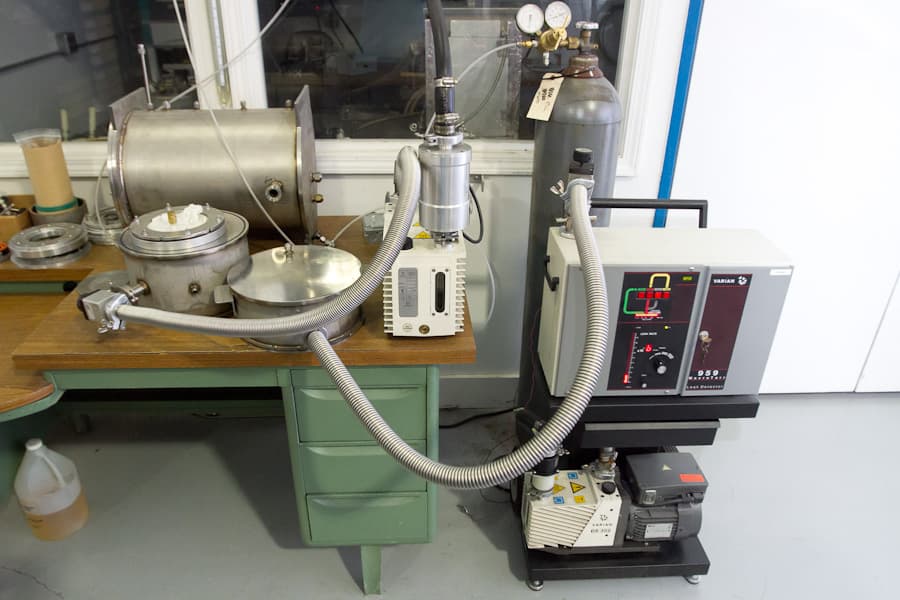
Helium leak testing is a non-destructive examination used to locate leaks in pressure, vacuum, and hermetic systems and enclosures by measuring helium passing through leak points. A pressure difference is produced between the outer and inner side of the object being examined.
Helium is chosen as the search gas because of its extremely small molecular size, and because it is non-poisonous and non-explosive. Sterling employs both vacuum and pressure testing methods, along with proprietary techniques, for accurate results.
02 · CONFIRM THE FIT
Helium Leak Testing Capabilities
- Fuel tanks
- Fuel vapor carbon canisters
- Fuel tank filler necks
- Fuel delivery modules
- Hoses
- Connectors and fittings
- Air conditioning components
- Valves and sensors
- Pressure vessels
03 · METHODS & CONDITIONS
Testing Methods & Conditions
- 01Non-destructive leak detection using helium as the search gas
- 02Vacuum testing and pressure testing methodologies
- 03Pressure differential established across the test object
- 04Proprietary techniques for complex parts
04 · REAL-WORLD FIT
Typical Applications & Assemblies
- Pressure, vacuum, and hermetic systems
- Fuel and HVAC components
Reporting & Compliance Data
Sterling delivers professional, concise, and accurate test reports backed by state-of-the-art data acquisition. Our reports are detailed enough to be submitted as engineering and government compliance backup data — so you get results you can act on and document.
ANSWERS FOR ENGINEERS
Frequently Asked Questions
What can Sterling helium leak test?
Fuel tanks, delivery modules, carbon canisters, filler necks, hoses, connectors, fittings, air-conditioning components, valves, sensors, and pressure vessels.
Why is helium used?
Its extremely small molecular size makes it ideal for finding small leaks, and it is non-poisonous and non-explosive.
Helium Leak Testing inquiry
Ready to define the scope?
Share the part or system, requirement, operating conditions, and desired outcome. Sterling's team will use that context to begin reviewing the appropriate testing approach.