Materials & Components
Materials Testing
Chemical, thermal, and mechanical materials testing across metals, plastics, elastomers, and fabrics to assess durability in the intended environment.
01 · UNDERSTAND THE SERVICE
Overview
Sterling Performance offers comprehensive materials testing across cloth, plastics, metals, fabrics, and components. Our 34,000 sq. ft. accredited laboratory uses chemical, thermal, and mechanical techniques to assess product durability in its intended environment.
02 · CONFIRM THE FIT
Materials Testing Capabilities
- Many forms of durability testing
- Fatigue testing and fracture
- Impact testing
- Chemical resistance
- UV exposure / UV testing
- Flammability testing
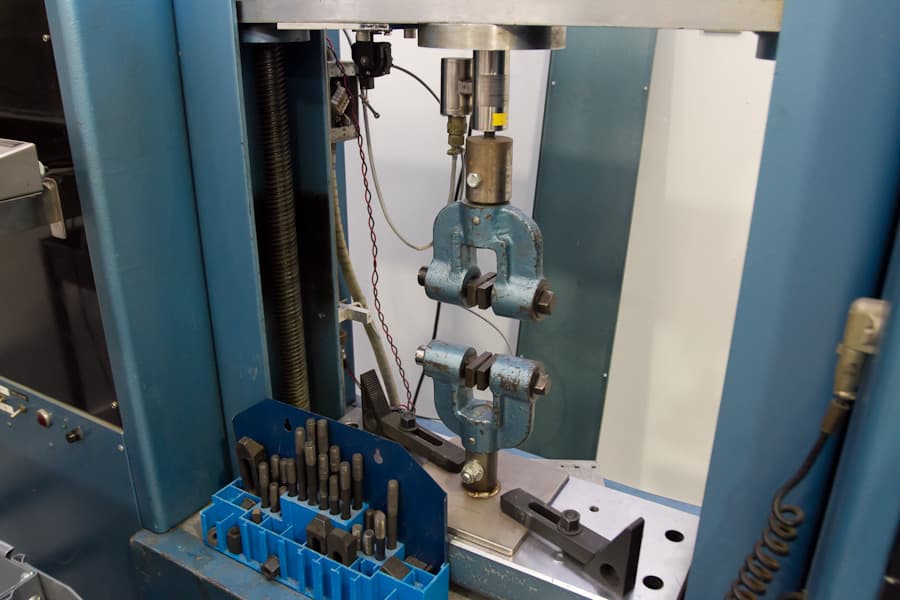
- Tensile properties / tensile testing
- Burst testing
- Thermal shock testing, thermal cycling
- Elevated temperature
- Environmental testing / environmental simulation
- Pressure cycling
- Load / compression testing
- Hardness & strength
- Flexural & peel testing
- Flexibility at different temperatures
- Tear / drop weight / drop testing
- Elastomeric material & rubber
- Modulus of elasticity
- Reduction, strength, yield, elongation
- Evaporative emission testing
03 · METHODS & CONDITIONS
Testing Methods & Conditions
- 01Mechanical: tensile, burst, load/compression, hardness, flexural, and peel
- 02Durability: fatigue, fracture, impact, and drop-weight testing
- 03Thermal: thermal shock, thermal cycling, and elevated temperature
- 04Environmental: UV exposure, flammability, and chemical resistance
- 05Elastomer/rubber flexibility and modulus of elasticity
04 · REAL-WORLD FIT
Typical Applications & Assemblies
- Metals, alloys, and plastics
- Rubber, elastomers, and fabrics
- Automotive and industrial components
Reporting & Compliance Data
Sterling delivers professional, concise, and accurate test reports backed by state-of-the-art data acquisition. Our reports are detailed enough to be submitted as engineering and government compliance backup data — so you get results you can act on and document.
ANSWERS FOR ENGINEERS
Frequently Asked Questions
What materials can Sterling test?
Metals, alloys, plastics, rubber, elastomers, and fabrics, as well as completed components.
What is the tensile and burst capability?
Tensile testing up to 10,000 lb from -40 °C to 150 °C, and burst testing up to 30,000 psi.
Can materials be tested under environmental conditions?
Yes. Testing can be run across a -77 °C to 177 °C range and combined with UV, humidity, and other environmental exposure.
Materials Testing inquiry
Ready to define the scope?
Share the part or system, requirement, operating conditions, and desired outcome. Sterling's team will use that context to begin reviewing the appropriate testing approach.